



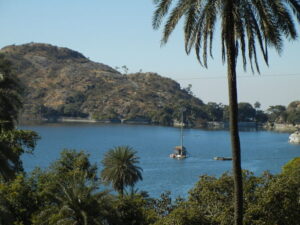
Mount Abu, Rajasthan’s only hill station, remains one of the most refreshing escapes for travelers from Jaipur. Perched on the lush Aravalli Range near the Gujarat border, the town blends cool weather, scenic viewpoints, serene lakes, and vibrant Rajasthani–Gujarati culture. Whether you’re planning a romantic getaway, a family vacation, or simply a break from the heat of the plains, Mount Abu serves as the perfect retreat.
Why Mount Abu Attracts Travelers from Jaipur
Known historically as Arbudaanchal, this hill town holds immense cultural and religious significance. It is mentioned in ancient Hindu texts and houses some of India’s most stunning Jain temples. Over time, Mount Abu has earned the nickname “Shimla of Rajasthan” for its pleasant climate and greenery—a contrast to the desert landscapes the state is famous for.
The ancient name of Mount Abu was Arbudaanchal.
Jaipur to Mount Abu Distance, Routes, and Travel Guide
The distance from Jaipur to Mount Abu is approximately 515–520 km, and the journey by road typically takes between 8 and 9 hours. The most popular and smooth route runs through Jaipur → Kishangarh → Ajmer → Beawar → Pindwara → Mount Abu via NH 48 and NH 58. Travelers enjoy wide highways, reliable food stops, and easy access to fuel stations along this road.
Many visitors prefer hiring a taxi from Jaipur to Mount Abu for the convenience of door-to-door travel. Taxis are available in sedans, SUVs, tempo travellers, and luxury cars. The drive is scenic, especially as you approach the winding uphill road that marks the entrance to the hill station.
Those planning an overnight journey can also opt for super-luxury buses from Jaipur to Abu Road, which depart from Sindhi Camp. Trains to Abu Road are frequent too, with taxis and jeeps readily available for the final 28 km climb to the hill town. Since Mt. Abu does not have an airport, the nearest air options are Udaipur Airport (176 km) and Ahmedabad Airport (223 km).
Places to visit in Mount Abu for stunning memories:
#1 Nakki Lake – As mentioned earlier, Nakki Lake is the center of all the tourism activities in Mount Abu. Major festival celebrations or parades could be witnessed at the banks of Nakki Lake. Also, the major markets and restaurants are within the vicinity of the beautiful lake.

#2 Mount Abu Wildlife Century – Another highlight of Mt. Abu is the amazing wildlife century which is approximately 30 km away from the main town. The subtropical forests are home to more than 250 kinds of species of animals and birds including Sambar deer, Common langur, wild bear, foxes, common mongoose, jungle cat, leopards, and many more. Spread over 228 square kilometers the area was declared a wildlife sanctuary in the year 1980.
#3 Dilwara Jain temple – Dilwara Jain temples are a group of temples built between the 11th and 13th centuries. Although these are a place of worship for the Jain community, these temples are visited by people of all faiths for their intrinsic architecture and impressive style. Located just a stone’s throw away from the main town these temples are made of the highest quality white marble.

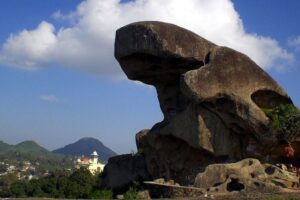
#4 Toad Rock Formations – Toad rock formation is popularly known as the mascot of Mount Abu. The rock got its name by its unique shape, which resembles a toad. Some of the rock formations are 6 billion years old. The rock is located on a trek near Nakki Lake, and one can see the scenic view of the lake and surroundings from this place.
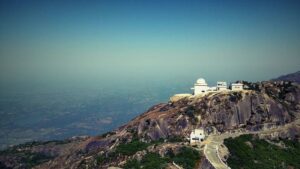
#5 Honeymoon Point – Your visit to Mount Abu is incomplete without visiting the honeymoon point. Situated at the height of 4000 ft above sea level, this place provides a breathtaking view of the city & Nakki Lake. You can enjoy the view of the setting sun on the horizon while listening to the silence of the natural surroundings.
Apart from the above don’t forget to visit Sunset Point, Raghunath Temple, and Arbuda Devi Temple in Mount Abu.
Shopping in Mount Abu
Mount Abu, the summer capital of the Rajputana rulers, has amazing shopping markets specially developed for tourists. They serve as an authentic local experience for every guest. Travelers can explore Rajasthan’s heritage and culture as well as a wide variety of goods from the neighboring state of Gujarat. Kota Sarees, bangles, and linen, along with beautiful handicrafts like Sanganeri prints, Jaipur quilts, and products made of marble, sandstone, and sandalwood are the highlights of these vibrant markets. Apart from these products, some people can also find Rajasthani crafts, paintings, and leather goods as well. We assure you, the shopping experience will give you fond memories.
What is the best time to visit Mount Abu?
Best Time to Visit Mount Abu – The ideal months to explore Mt. Abu are from October to April, when the weather remains cool and inviting. Winter can be chilly at times, with temperatures dipping to around 4°C, so carrying light woolens is recommended. Monsoon season, from July to September, is also beautiful with misty hills, greener trails, and breathtaking views—perfect for nature lovers.
Food in Mount Abu, Rajasthan
The markets of Mt. Abu reflect a mix of Rajasthani and Gujarati culture, making shopping an enjoyable part of the trip. You will find Kota sarees, Jaipuri quilts, Sanganeri print fabrics, marble and sandstone handicrafts, sandalwood items, and colorful bangles. Travelers also love picking up leather goods, tribal artwork, and miniature paintings.
Food in Mount Abu carries influences from both neighboring states. Visitors can try Rajasthani delicacies like Daal Baati Churma, Laal Maas, Gatte ki Sabzi, and Bajre ki Roti, as well as Gujarati dishes and sweets. Small eateries, lakefront cafés, and rooftop restaurants make exploring Mount Abu’s food scene fun and diverse.

Why Book a Taxi from Jaipur to Mount Abu
Booking a cab is one of the most convenient and comfortable ways to reach Mount Abu from Jaipur. It allows flexible stops, direct hotel drop-off, quick detours to nearby attractions, and a smooth journey for groups, families, and couples. The road to Mount Abu is mostly highway-driven, with the final climb consisting of scenic curves that are best handled by an experienced driver. Many travelers also opt for round-trip taxis to explore Udaipur, Ambaji, and other nearby attractions on the same trip.
Your Ride to Mount Abu Awaits – Click to Book Your Taxi!
Here is a list of other popular tourist destinations near Mt. Abu:
- Jodhpur (259 km)
- Bikaner (497 km)
- Chittorgarh (266 km)
- Mandawa (587 km)
We hope this article answers all your questions related to places to visit in Mt. Abu. If you like to recommend something for the trip to the Hill Station in Rajasthan, do let us know in the comments section. Namaste.
FAQs related to Mount Abu
Question: How far is Mount Abu from Jaipur?
Answer: Mt. Abu is around 515–520 km from Jaipur by road, depending on the chosen route.
Question: How long does it take to reach Mount Abu from Jaipur by taxi?
Answer: The drive takes approximately 8–9 hours, with additional time for breaks.
Question: What is the best route to drive from Jaipur to Mt. Abu?
Answer: The preferred route is Jaipur → Kishangarh → Ajmer → Beawar → Pindwara → Mount Abu via NH 48 and NH 58. It offers smooth roads and convenient stops.
Question: How much does a taxi from Jaipur to Mt. Abu cost?
Answer: Taxi fares generally range from ₹8,000 to ₹12,000 for a one-way trip, depending on the type of vehicle and season.
Question: Is Mt. Abu good for a weekend trip from Jaipur?
Answer: Yes, many travelers plan 2-3 day weekend trips to Mt. Abu due to its cool climate and scenic attractions.
Question: Which is the nearest railway station to Mount Abu?
Answer: Abu Road Railway Station, located around 28 km away, is the closest railhead.
Question: Are buses available from Jaipur to Mount Abu?
Answer: Yes, overnight luxury buses run regularly from Jaipur’s Sindhi Camp to Abu Road.
Question: Does Mount Abu have an airport?
Answer: No, the nearest airports are in Udaipur (176 km) and Ahmedabad (223 km).
Question: What are the must-visit places in Mount Abu?
Answer: Nakki Lake, Dilwara Temples, Toad Rock, Guru Shikhar, Sunset Point, and the Mt. Abu Wildlife Sanctuary are among the top attractions.
Question: How many days are enough to explore Mount Abu?
Answer: Two days are ideal for covering major attractions at a relaxed pace.